

Choose a D&D Portrait Pose That Fits Your Character
A useful pose starts with a moment, not a list of heroic adjectives. Choose what your character is doing and keep the important details visible.
 Jan
6 min read
Jan
6 min read
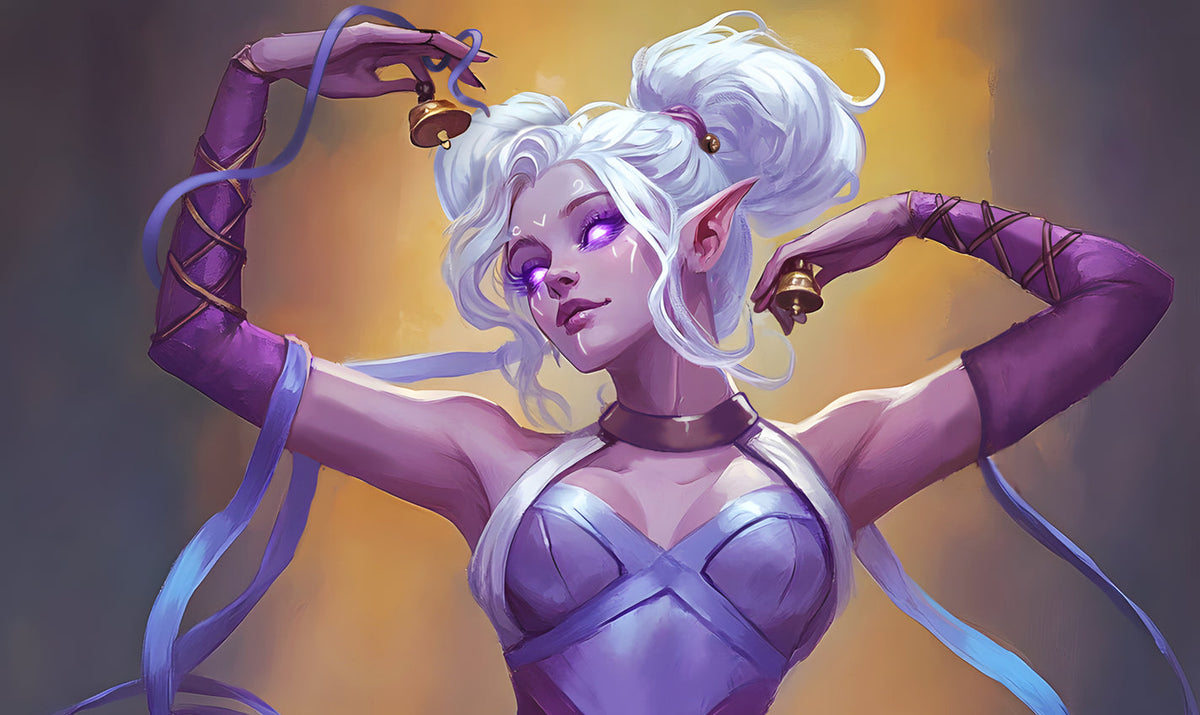
“Confident warrior” is a useful starting point. It still leaves your artist to choose whether the character is greeting someone, guarding a doorway, or halfway through a fight. Those portraits will tell different stories.
For a D&D character portrait, choose one moment your character belongs in. Then explain what their hands are doing, where their attention goes, and which details must stay visible. You can give clear direction without describing every joint.
Start with something your character is doing
A personality word leaves room for interpretation. A small action narrows it. “Protective” becomes easier to paint when you describe someone holding a doorway open for the rest of the party.
The action can be quiet. A wizard adjusting a cuff before answering an insult gives the artist more to work with than “mysterious and powerful.” There is no requirement to be mid-explosion. Your wizard is allowed to have an afternoon.
Pick a moment that still feels like your character after the novelty wears off. If they spend most sessions talking their way through trouble, a conversational pose deserves consideration alongside a battle stance.

Choose body language before adding spectacle
A composed portrait
Describe what keeps the character still. They may be waiting for an answer, holding something carefully, or watching the room. Decide whether the shoulders and hands should feel relaxed or held in check.
A portrait in motion
Name the action and the instant you want to catch. “Turning to warn the party” gives direction. “Very dynamic” leaves the movement, balance and focal point undecided.
Neither approach is the better portrait for every character. A still pose can carry a lot of personality. Action gives you movement, but it also needs room for limbs, clothing and equipment.
Artist Eridey discusses movement and balance in this pose guide. For a commission brief, you do not need the drawing lesson. Give the artist an action with a clear purpose and allow them to find a believable way to stage it.

Give the hands a job
Hands can explain a character before a viewer notices their equipment. A grip, an open palm, or a careful hold changes the action. Decide what the hand is meant to accomplish rather than requesting a dramatic hand gesture because the pose feels empty.
If a ring, weapon, spell focus or keepsake matters, say how it should be shown. “The ring must be readable on the raised hand” is a useful requirement. “Somewhere in the picture” lets it become a detail you can only find at full zoom.
Check which hand is involved. Describe the character’s own left hand, rather than the left side of the picture. A left-handed character should not lose that detail between the reference and the brief. If the object belongs in the opposite hand for a reason, explain the exception.

Match the pose to the portrait crop
FramedFantasy offers half-body, thigh-up and full-body portraits. Choose the pose with that frame in mind. A movement that depends on the feet cannot be explained by a crop that leaves the feet out.
- Half-body. Put the emphasis on the face and upper-body gesture. Confirm that an important hand or object stays inside the frame.
- Thigh-up. Use the extra space to show more of the stance and costume. Check whether the hands, belt or carried object need room near the lower edge.
- Full-body. Let the legs and feet contribute to the action. Make sure the face still has a clear role in the composition.
The portrait format guide covers the crop decision in more detail. Here, the question is which parts of the pose your viewer needs to understand.
Explain who the character is facing
Looking at the viewer makes a different scene from looking past them. Tell your artist whether the portrait is meant to feel like a direct introduction or a moment the viewer happens to witness.
For a direct introduction, decide whether the viewer stands in for a friend, a rival, or a stranger approaching the camp. For an observed moment, the character may be listening to someone beyond the frame. The relationship gives the gaze a reason.
This also helps when you want a character to look guarded without looking hostile. Write what they are responding to. The artist can then consider the head angle and attention alongside the expression.
Use references to explain separate choices
One reference does not have to contain the entire portrait you want. You can use a photo for the stance and a different image for how an object is held. Label each one so the artist knows which part matters.
A useful note says, “This reference shows the loose stance I mean. Please keep my character’s clothing and face from the character brief.” That gives direction without asking for a copy of someone else’s finished illustration.
Use references you are allowed to share. If you take your own photo, keep the camera near the angle you have in mind and avoid a lens position that makes the nearest hand look huge by accident. An awkward selfie can become a surprisingly specific art direction problem.
A sample pose brief you can adapt
This brief gives the artist a scene, a visible action and a boundary. It does not need to specify an elbow angle. If your character is entirely different, keep the structure and replace the moment.
Review the pose before chasing tiny details
When you are reviewing a composition, look at it at ordinary reading size first. Can you tell where the character is looking and what they are doing? Check the hands next, especially if handedness or an important object was part of your brief.
Then compare it with the crop you chose. If something essential has gone out of frame, describe that specific problem. “The ring needs to be visible” is easier to act on than “make the pose more epic.” Follow the agreed review process and scope with your artist.
A good pose gives your character a moment to inhabit. Choose that moment, protect the details that matter, and leave enough room for the artist to make the picture work.
When you are ready to put those choices together, use the character brief guide. Add the pose as one short section rather than turning the whole brief into stage directions.


