Free D&D Character Reference Art: Build a Useful Starting Point
Find a free visual starting point, label what belongs to your character and build useful references before commissioning a portrait.
 Jan
4 min read
Jan
4 min read

You can put together useful D&D character reference art without paying for a portrait yet. Start with something you made, a character-creator screenshot you can use, or artwork whose creator permits your intended use. Then label the details that belong to your character.
The useful part is knowing what the picture explains. A beautiful elf with the wrong face and a bow your ranger would never carry is a weak reference, however impressive the rendering looks.
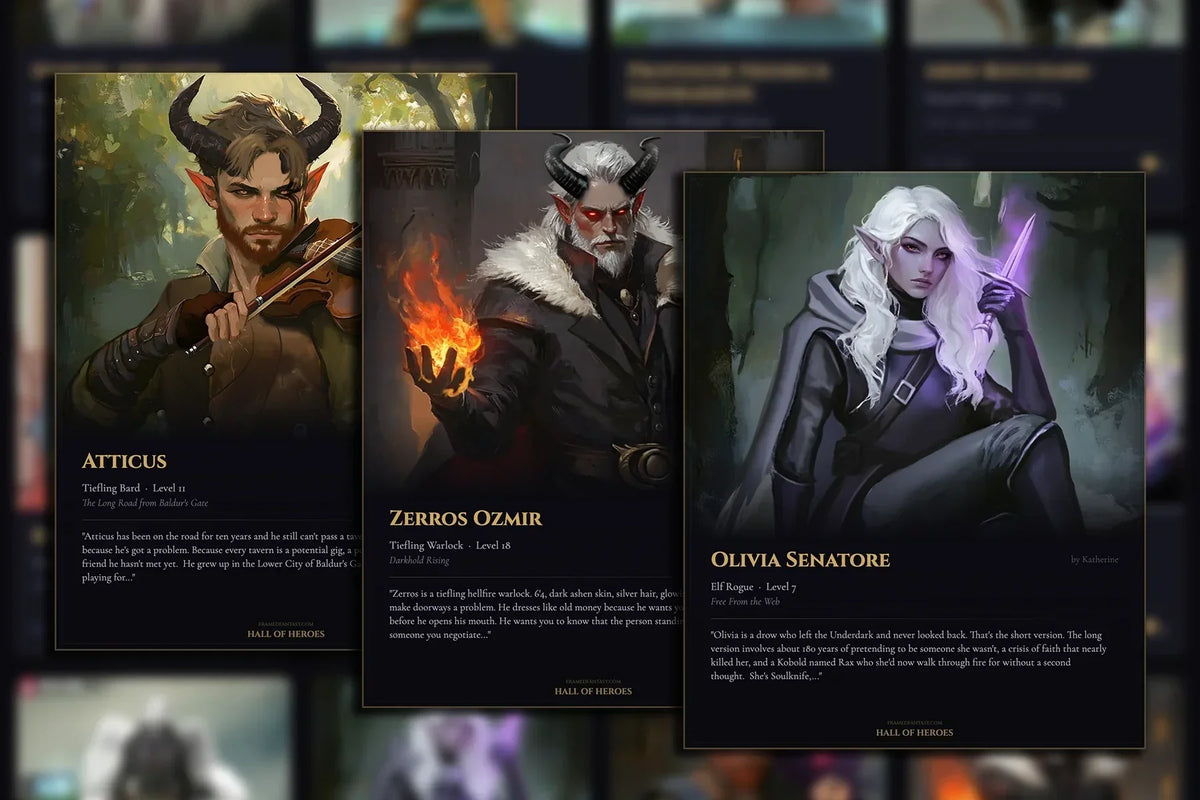
This guide helps you build a visual starting point for your character sheet, your campaign notes, or a future commission. The illustrated FramedFantasy portraits are examples of visual decisions, not free downloadable portrait assets.
Choose a starting point that suits the job
| Starting point | Good for explaining | What to check |
|---|---|---|
| Your own rough drawing | Pose, outfit layout, the position of a scar or accessory | Add notes when the shape needs explanation. Drawing skill is optional. |
| A screenshot from a creator you already use | Equipment, colors, broad body shape | Use several views. Check the platform's rules before publishing or distributing it. |
| Art offered under permission or a suitable license | A temporary portrait or a specific visual reference | Confirm the permission covers the use you have in mind and keep the required credit. |
| A small collection of reference images | Separate face, clothing, weapon and mood decisions | Name what each image contributes. A reference board does not make the images yours. |
A rough stick figure holding a sword in the correct hand can explain more than a polished image holding it in the wrong one. The artist needs the decision, not a drawing exam.
Write three details before searching for pictures
Give yourself a short target. Pick one thing about the face, one important part of the outfit, and one clue to the character's personality.
For a fictional ranger called Tessa: a broad nose with a healed break, a weathered green coat with a red lining, and the relaxed posture of someone who knows the forest better than the road.
Now your image search has a job. You can recognize a useful coat reference without deciding that the person wearing it must become Tessa's face, hairstyle and entire personality.

Label each reference with one useful sentence
Sending six images with “something like these” leaves the artist to guess which six things you meant. Give each image a name and a narrow purpose.
- Face: “Use the width of the nose and jaw. My character has different eyes and no beard.”
- Coat: “The long hem and worn fabric are right. Change the blue lining to red.”
- Pose: “Keep the open stance, but put the bow in her left hand.”
- Light: “I like the soft forest light. The background can stay simpler.”
Make the exceptions visible too. A note saying “no horns” matters when the reference has an enormous pair. Leaving that detail unsaid is an excellent way to spend your first feedback message explaining the horns.
Give important equipment its own reference
Small objects disappear inside large mood boards. If the sword's guard, the family crest or the shape of the staff matters, send a close view with a plain description.

For an invented heirloom sword, “a straight blade with a plain leather grip and a crescent-shaped guard” gives a clear starting point. Add its story only where that story changes the appearance, such as a repair that needs to remain visible.
Check how the image will actually be used
A reference board for an artist and a portrait posted publicly are different jobs. Keep source links and permission notes with the images. If the permission is unclear, ask the creator or choose another source.
Looking at the Hall of Heroes can help you notice compositions, clothing choices and character details. It does not turn another player's portrait into a free asset for your own character or project.
For a character-sheet placeholder, test the crop at the size you will see during play. A full scene can look lovely on a monitor and become an unreadable patch beside your hit points. Keep an uncropped reference copy even when the sheet needs a tighter view.
Know when your reference is ready
You are ready to brief an artist when you can point to the face, explain the important equipment and name the details that must remain. You do not need a fully solved character design before asking for help.
Keep open decisions marked “artist's choice.” That tells us where to contribute rather than accidentally changing something you have carried through two years of play.
If you want help putting the character into words, try Character Quest. The adventure builds toward a character blueprint you can review, rather than requiring you to start with a finished description.
For a painted portrait, FramedFantasy offers half-body, thigh-up and full-body commissions. Choose the format around what needs to be visible, and bring your labeled references with you. Jan works on every commission with her team of vetted artists, and you talk to Jan throughout the process.