Make a Character Mood Board That Explains Your Choices
Give each reference a purpose, resolve conflicting ideas and send an artist a board that explains your character.
 Jan
4 min read
Jan
4 min read
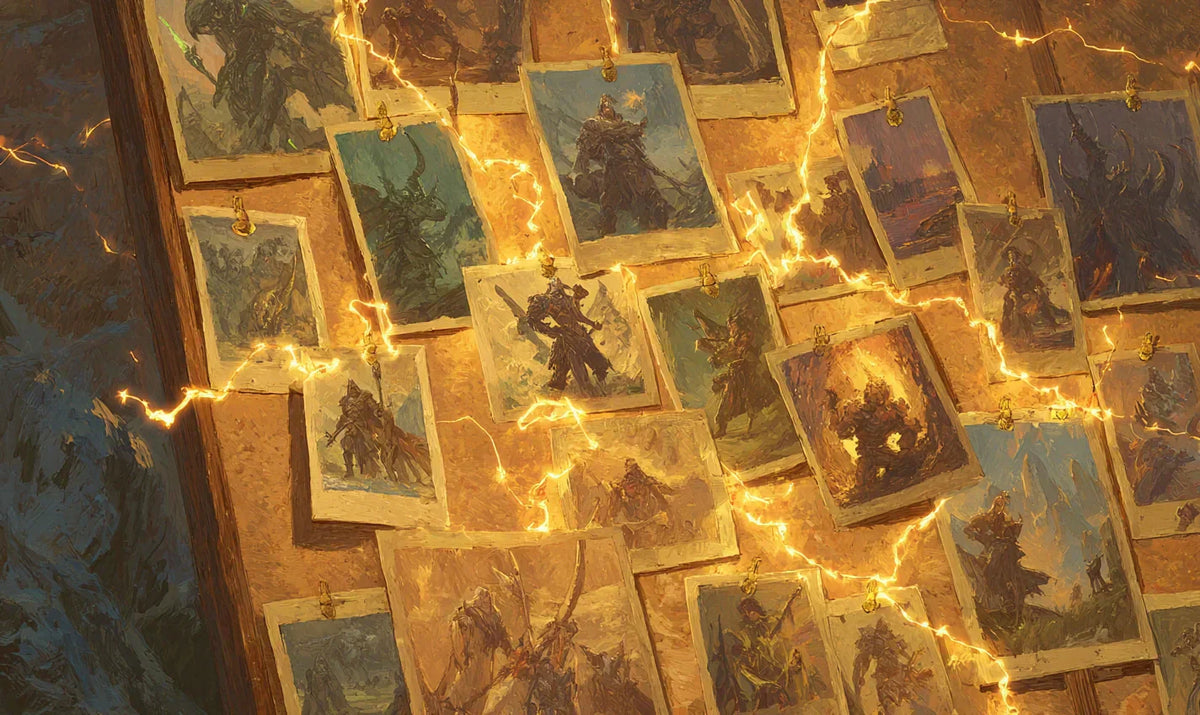
A useful character mood board explains what each reference contributes. Label the hair, material, pose or atmosphere you want, then say which parts of that image should stay out of your commission.
You do not need an impressive collage. A small collection with clear notes gives the artist more to work with than a folder of beautiful pictures whose purpose nobody can explain.
Start with the character you already know
Before collecting images, write down the traits that belong to your character. Include their appearance, a few important objects and the overall feeling you want the portrait to convey.
Keep existing approved character art separate from general inspiration. If one picture establishes the face and another only suggests a coat material, make that distinction visible. Otherwise the artist has to guess which reference wins.
A board is also optional unless your chosen provider requires it. Ask what they need. Artist GaelRice’s character-design guidance, for example, requests a mood board for first-time designs. That is a particular provider’s intake process, not a rule for every commission.
Give every image one declared job
Choose a reference because it answers a question. You can use your own photographs, original sketches and material you have permission to share. Link to other creators’ work and ask the artist how they prefer to handle it.
A source link records where a picture came from. It does not grant permission to copy the artwork or another character’s distinctive design.

| Reference job | Useful label | Boundary |
|---|---|---|
| Clothing material | “Heavy, matte wool with a rough edge.” | “Ignore this coat’s emblem and cut.” |
| Hair | “Loose white hair reaching the shoulders.” | “The pictured face belongs to someone else.” |
| Pose | “One arm raised with the weapon across the shoulders.” | “Use my character’s own clothing and weapon.” |
| Atmosphere | “A quiet evening with a warm light nearby.” | “This is mood, not a request for this exact location.” |
Those are fictional instructions, not the original brief for the artwork. Adapt the labels to the character you are commissioning.
Separate colors from lighting
A purple glow can change how a neutral garment looks. If you want a purple coat, say that directly. If you want a gray coat illuminated by purple magic, explain that instead.

For a fictional traveling mage, the note could read “The coat is dark blue in ordinary light. The staff gives off a small violet glow. Keep the face readable.” That describes a choice the artist can discuss without requiring a lighting vocabulary lesson.
Resolve conflicting ideas before sending the board
Review the references together. A polished ceremonial outfit and a mud-covered travel coat can each be useful, but decide which condition appears in this picture.
If you want to explore both, ask whether the artist offers that design exploration and how it changes the quote. A portrait order should not quietly become a request for several outfit concepts.
Keep alternate ideas in a separate section marked optional. The main board should show the direction you want checked first. Your bard can own seven coats without making the artist choose their wardrobe by committee.
Attach a priority note the artist can use
Priorities help when the chosen crop cannot show every item. A half-body portrait, thigh-up portrait and full-body portrait leave different amounts of room for equipment. Ask which details fit the format before treating every reference as a promised inclusion.
Send a board somebody can actually open
Use clear labels and readable images. Check sharing permissions on the document, keep source links accessible, and avoid a private link that requires an unexpected account. A PDF or shared board can work if the artist accepts that format.
Finish with a short written brief. Use the character-description guide to connect the board to the portrait’s intended use, essential details and agreed scope.
When you are ready to discuss a FramedFantasy portrait, share the specific decisions the board helped you make. Check the current commission options before assuming extra concepts or multiple versions are included.