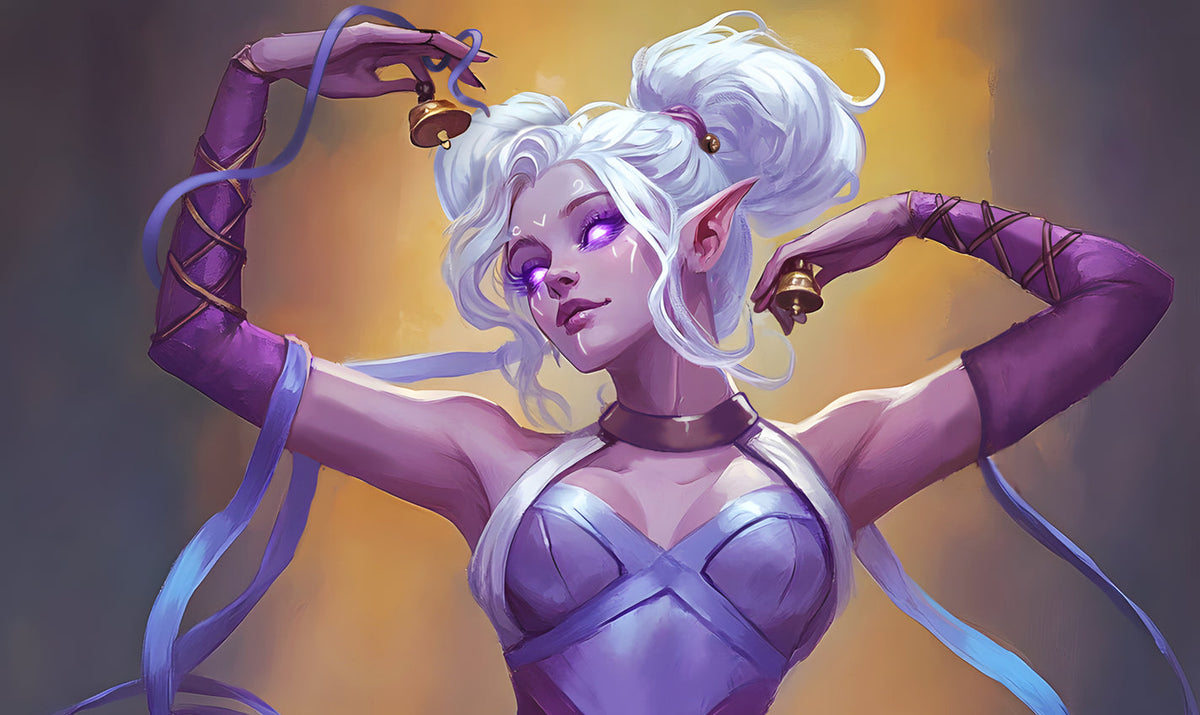
The Power of Character Art
Character art can tell a small part of your character's story before anyone reads the backstory. Clothes, posture and a well-chosen object give the viewer something concrete to notice.
 Jan
2 min read
Jan
2 min read

Character art can tell a small part of your character's story before anyone reads the backstory. Clothes, posture and a well-chosen object give the viewer something concrete to notice.
You do not need to fit every campaign event into one image. Choose the part of the story you want this portrait to hold.
Let one object carry a memory
A hypothetical cleric might keep a cracked bell from the temple she could not save. The portrait can show it tied to her belt or held carefully in one hand.

Explain the object's importance to the artist. Its shape, condition and placement matter more than a paragraph about every room in the temple. Tell the viewer what it means in a caption when you share the finished piece.
Show how the character treats their belongings
The same sword can tell different stories. A meticulously cleaned blade suggests care. A chipped guard and mismatched repair suggest hard use. A ceremonial sword held awkwardly might belong to someone who is still learning.
Wear should have a purpose. Adding dirt and damage everywhere can make a character harder to read without saying anything specific.
Choose an expression for this version of the character
Think about when the portrait takes place. The face before a difficult bargain may differ from the face after it. You can ask for quiet resolve, an uneasy smile or the relief of being home without asking for theatrical emotion.
A useful direction is “She is trying to look calm for the others, but she is still frightened.” Then discuss which visible cues could express that feeling.
Give the story room in the composition
A face-led portrait suits an expression or a distinctive feature. More body space helps when the hands, outfit or equipment carry the story.

| Story detail | Composition question |
|---|---|
| A changed expression | Is the face large enough to read? |
| An heirloom held in the hands | Are the hands and object included? |
| A new outfit or stance | How much of the body must be visible? |
FramedFantasy offers half-body, thigh-up and full-body formats. Check the agreed crop before assuming a prop or hand will fit.
Leave some things for the campaign
The portrait can suggest a history without explaining all of it. A viewer can notice the bell and ask a question. That gives your character a chance to answer in play.
Choose the portrait format around your story detail before you settle the brief.