How to bring your D&D character to life (beyond the sheet)
Your character sheet says fighter, level 8. That tells you nothing about who they actually are. Here's how to close the gap.
 Jan
8 min read
Jan
8 min read
Your character sheet says human fighter, level 8, background soldier. Your DM just asked you to introduce yourself to the new NPC at the tavern. You've been playing this character for six months. And somehow you still open your mouth and nothing comes out that sounds like a real person.
Yeah. I've been there. I think everyone at the table has been there.
Here's the thing nobody tells you when you roll your first character. The sheet is a skeleton. It has bones. It doesn't have a face, a voice, a childhood friend they lost, a weird thing they do when they're nervous, or a reason they keep the locket in their pack even though it's been broken for years. If you want to bring your D&D character to life, you have to fill in all the stuff the character sheet doesn't ask you about.
I've read something like 500 character backstories at this point, because I paint people's characters for a living. Some characters feel alive the second their player starts describing them. Others feel like they were built by filling out a form. The difference isn't the race. It isn't the class. It isn't even the backstory length. It's something else, and I want to show you what it is.
Your character sheet is not your character

Character sheets exist so you can run combat without getting into fights about whether you rolled high enough. That's their job. They do it well.
But a character sheet is incapable of telling you who your character is. It tells you what they can do. Those are different things.
A stat block of STR 16 DEX 12 CON 14 tells you a fighter is physically strong, decently quick, and can take a hit. Great. Now answer this. What do they eat for breakfast? What do they think about when they can't sleep? What did they want to be when they were a kid? Do they miss anyone? Do they hate anyone? Are they afraid of anything that isn't a dragon?
If you can answer those questions, your character is alive. If you can't, they're a mannequin in armor.

Start with one specific detail, not a backstory
Most players try to flesh out their character by writing a backstory first. That's the opposite of what works.
Backstories are summaries. Summaries are boring. What makes a character feel like a person is the one specific, weird, concrete detail that doesn't fit on the character sheet. A player in the Hall of Heroes submitted a fire genasi named Kael. Fire genasi are supposed to burn hot and bright. Kael's flames burn cold and blue. That one detail tells you more about the character than a three paragraph backstory ever could.
Another player submitted a character whose eyepatch isn't a war wound. It's the price of a pact with a dark god. That's not information that lives on the character sheet. It lives in the space between the sheet and the player.
Pick one of these and write it down right now.
A scar they lie about. A food they refuse to eat and won't say why. A name they stopped using. A song they hum when they're thinking. A person they send money to every month. A drawer they never open. Something small. Something specific. Something that raises a question you don't have to answer immediately.
Now your character has a thread to pull on. Everything else grows from there.
Find their voice (and I mean this literally)
This one's going to feel silly the first time. Do it anyway.
Say a full sentence as your character. Out loud. In the car, in the shower, walking to the kitchen. Doesn't matter where. What you're listening for is whether it sounds like you or whether it sounds like them.
If it sounds like you, keep going. Try it again. Try it with more rasp, or softer, or older, or more clipped. Most players carry their own speech patterns into their character and don't realize it. Your rogue ends up speaking like a mid-30s accountant from Ohio because that's who you are, and without effort, that's who your rogue becomes.
You don't need a full accent. You don't need to be good at voices. You just need one thing your character says that you'd never say. One verbal tic. One phrase they lean on. A paladin I saw recently had one catchphrase. Every time he succeeded at something hard, he said "thank the light, and thank the steel." That's it. Three sessions in, the rest of the table started saying it back to him. That's a character who's alive.
Give them a contradiction

Real people are contradictions. A tough person who cries at dogs. A scholar who never learned to swim. A paladin of mercy who has a temper problem she can't control.
D&D characters usually don't have contradictions because most players build "optimized" personalities the way they build optimized stats. Lawful good paladin, all the way good. Chaotic rogue, all the way chaotic. That makes sense mechanically and it kills the character as a person.
Give them one thing that doesn't fit. A barbarian who reads poetry. A necromancer who's terrified of his own powers. A bard who stutters around the person he's trying to romance. The contradiction is where the roleplay lives, because the contradiction is where the character has to choose.
Write what they want (and what they're scared of)
Every character needs two things written down somewhere. Not on the sheet. Somewhere you can see them. A sticky note on your laptop works.
What do they want more than anything else in the world? Not the campaign goal. Their goal. The thing they were chasing before the adventure started and will still be chasing after the adventure ends.
What are they terrified of? Not a combat thing. An emotional thing. Being alone again. Being wrong about someone. Being their father. The specific fear that would make them panic even if no dice were involved.
These two things are the engine of every meaningful roleplay moment you'll ever have. When your DM puts your character in a scene, you're not asking "what's the tactically correct move." You're asking "what does my character want here, and what are they scared of losing." The answer writes itself once you know both.
Steal shamelessly from people who've already done it
The fastest way to flesh out a D&D character is to read other players' characters and notice what makes them feel alive. Not to copy them. To steal the technique.
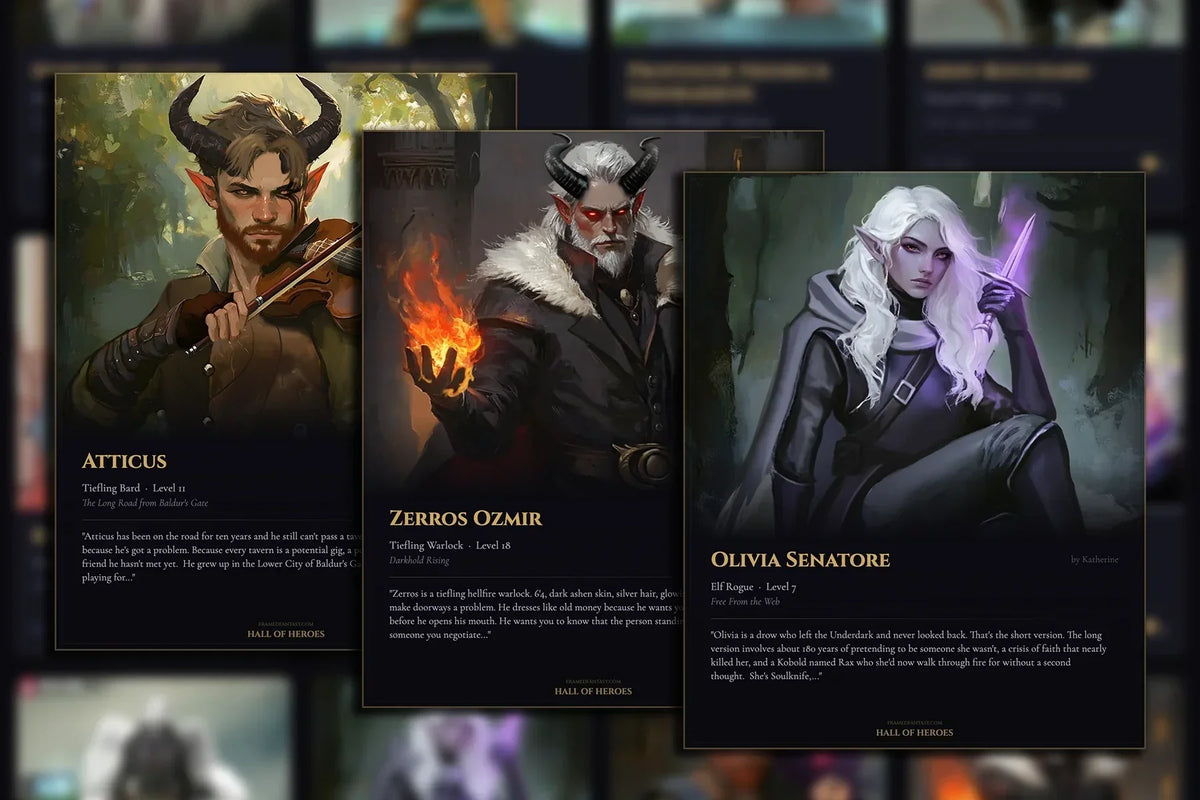
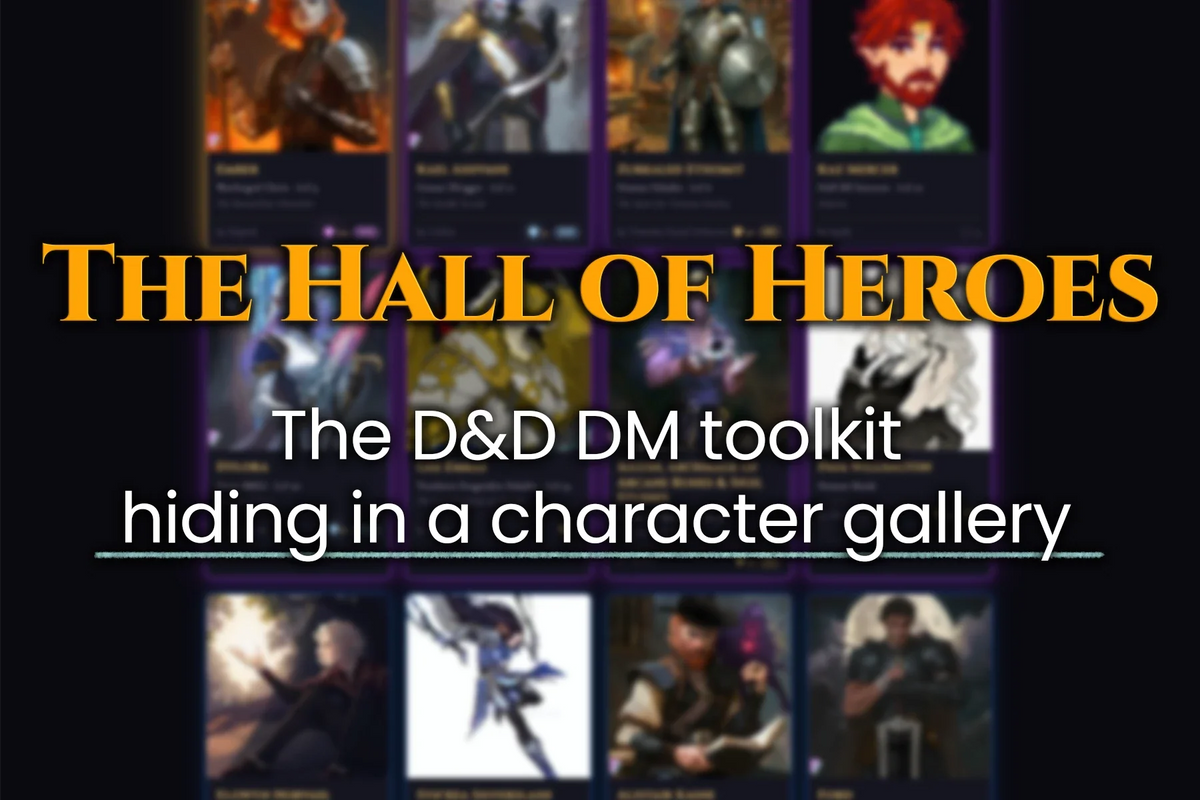
That's why I built the Hall of Heroes. It's a gallery of real player-submitted D&D characters, written by the players themselves, with their builds and their campaigns and their actual backstories. Not generator output. Not hypothetical examples. Actual characters people are playing right now.
Browse for 15 minutes and you'll notice patterns. The characters that feel most alive almost always have one concrete contradiction, one weird specific detail, and one clear emotional wound. The characters that feel flat read like a summary of their class features.
You'll steal better than you know. Your brain will start running your own character through the same tests automatically. That's the whole point.
Let them change at the table
Last thing. A lot of players build a whole character in advance and then protect that character from the campaign. Your backstory is locked, your personality is locked, your arc is plotted. Then when something actually happens at the table that would change them, you steer around it because it doesn't match the plan.
Don't do that. The best characters I've ever painted are the ones whose players let them grow up at the table. The lawful good fighter who slowly discovered she was capable of cruelty. The self-described coward who found out he'd die for his friends. Those changes never happen if the character is locked in from session zero.
Bring your character to life by giving them somewhere to go.
If you want to see your character outside your head

One of the reasons I paint D&D characters for a living is that most players get to a point where they can feel their character so clearly in their own head that it starts to hurt that nobody else can see them. You can describe the red hair and the scar over the left eye a hundred times and your friends still don't picture what you picture.
If that's where you are, drop your character in the Hall of Heroes. Tell their story. Every month I pick one submitted character and paint their portrait for free. No purchase required. It's my favorite thing to do.
Frequently asked questions
How do I make my D&D character feel more real?
Start with one concrete detail that doesn't fit on the character sheet. A scar they lie about, a food they refuse to eat, a name they stopped using. Build outward from that one detail instead of trying to write a full backstory first. The specific detail makes the character feel like a person. Summaries don't.
How long should a D&D character backstory be?
Shorter than you think. One to three paragraphs is plenty for most campaigns. What matters is whether it contains a specific wound, a specific want, and a specific quirk. A two page backstory with none of those three things is useless. A single paragraph with all three is gold.
What makes a D&D character boring?
Boring characters are usually over-optimized. Their personality matches their class exactly. Their morality is one-note. They have no contradictions. They want what their class is supposed to want. They're scared of what their class is supposed to be scared of. Give them one thing that doesn't fit the archetype and they stop being boring immediately.
Where can I find examples of fleshed-out D&D characters?
The Hall of Heroes is a free community gallery where D&D players submit their characters with full backstories, builds, and portraits. You can filter by race and class. Reading how other players wrote their characters is one of the fastest ways to improve how you write your own.