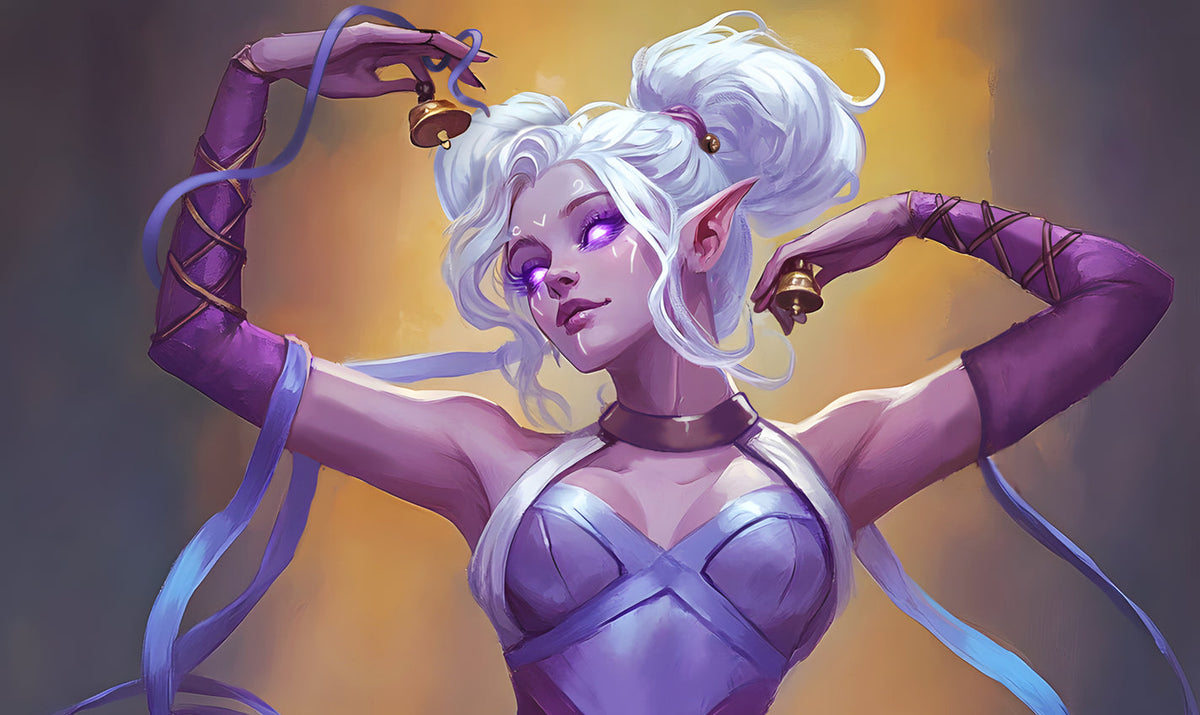
Why Your D&D Character Feels "Invisible" & The Power of Custom Art
If the other players keep picturing a generic elf when you describe your character, give them a few details they can remember. A portrait can help, but a good introduction matters too.
 Jan
3 min read
Jan
3 min read

If the other players keep picturing a generic elf when you describe your character, give them a few details they can remember. A portrait can help, but a good introduction matters too.
Your character sheet tells the party what you can do. Their appearance tells people who has walked into the room. Those are different jobs, and you can make the second one easier without buying anything.
Choose the details someone could recognize across a room
For a hypothetical ranger, “brown hair, leather armor, longbow” could describe half the adventurers in town. A yellow scarf tied around the bow, a crooked shoulder strap and a habit of watching every doorway give the group something more specific.

Pick one large visual cue and one smaller personal detail. Keep them consistent when you introduce the character again. You can reveal the rest when it becomes relevant.
An introduction you can use
“You see a ranger with a yellow scarf tied around her bow. She sits where she can watch the door and keeps turning a chipped silver ring.”
This is a fictional example. It gives the party a picture and leaves a question for them to ask.
Show a portrait with enough context to make it useful
When you share art in the campaign chat, add a short explanation of the detail that matters. Tell the group that the ring belonged to the ranger's sister, or that the immaculate uniform is borrowed. A picture cannot explain every part of a backstory by itself.

Use the same image where the group actually sees the character: the campaign notes, character sheet or virtual tabletop. Keep a clear face crop for small displays. A beautiful full-body piece can lose its expression when it becomes a tiny token.
Art helps recognition. Play gives it meaning
A portrait will not make a quiet character receive more story time, fix a distracted group or change how your DM runs encounters. If that is the problem, talk about it directly.
What art can do is make a description easier to share. The meaning comes from choices at the table: who your character protects, what they refuse to forgive and what they do when the plan falls apart.
If you commission the character, brief the visible parts
Tell the artist which details must survive the finished image. Explain where the portrait will be used and which expression feels right. Separate those essentials from ideas you are happy to leave open.
I work on each commission with my team of artists. A clear brief gives us something concrete to paint and refine around your character, rather than another version of a familiar class stereotype.
See what to send for your first character commission when you are ready to turn that description into a portrait.