Plan a Fantasy Portrait From a Photo, With Likeness in Mind
Keep the face recognizable while changing the world around it. A small reference packet makes the fantasy choices and likeness priorities clear.
 Jan
4 min read
Jan
4 min read
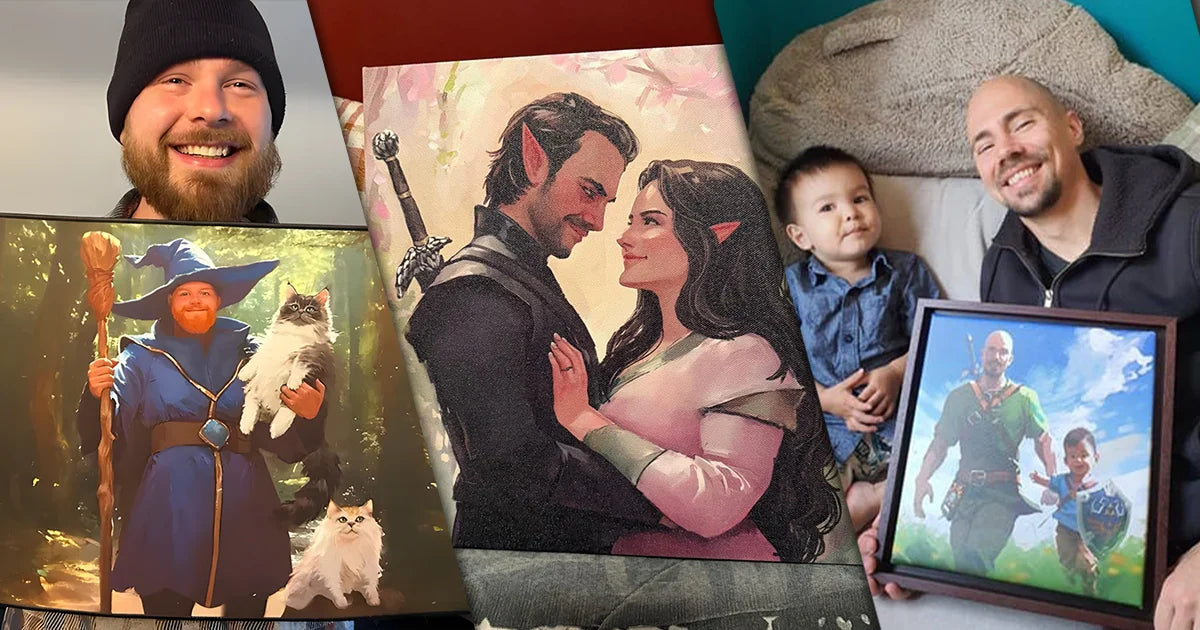
A fantasy portrait can change the clothes, the setting and the world around someone. The face still needs to feel like the person you chose. Start by telling the artist which features to preserve and which parts you want transformed.
You do not need to know every D&D class to make that request. A clear photograph, a few recognition notes and a simple fantasy direction give the conversation a useful starting point.
Choose a photo that shows the person you recognize
Pick a main image where you can see the eyes, face shape and usual expression. Zoom in before sending it. If the face is tiny, blurred or hidden by a strong filter, say so and ask whether another image is needed.
A supporting photo can show something the first one hides, such as a hairline, glasses or the shape of a beard. Label which photo represents the current appearance. A childhood haircut and a recent beard do not need to settle their disagreement in the finished painting.
FramedFantasy’s photo-portrait page invites you to ask about a photo’s suitability. You can get that question answered before relying on an unclear image.
Name the features that make it feel like them
Write three or four specific observations. The shape of the glasses, a crooked smile, a beard’s length or the way the eyebrows sit can be more helpful than “make him look heroic.”
Keep the wording about the person’s actual appearance and preferences. Avoid asking an artist to “fix” a feature without explaining what you mean or whether the subject wants it changed.
| Keep | Change | Discuss first |
|---|---|---|
| Round glasses, short beard, familiar warm smile | Everyday shirt becomes a blue traveling coat | Whether the glasses suit the chosen fantasy setting |
| Current hair shape and nose profile | Room becomes a cliffside observatory | How much of the face the new angle shows |
| Visible freckles the subject likes | A telescope and star chart become props | Which prop can fit without crowding the face |
This is a fictional planning example. It separates identity from costume so each decision can be checked on its own.

Choose how far the transformation should go
Decide whether you want a real person in fantasy clothing or a more substantial change, such as pointed ears or unusual skin color. Put those changes in writing. A transformation request should not leave the recognizable face to chance.
Check the provider’s portfolio for the kind of finish you enjoy. A stylized portrait and a photographic-looking image can both be appealing, but they interpret features differently. Show the artist an example of the level of stylization you want and ask whether it fits their work.
One provider, Fantasmatics, also describes beginning with a photo and discussing fantasy ideas. That demonstrates a possible commissioning approach, not a universal guarantee of likeness or FramedFantasy’s exact process.

Handle reference photos with care
Use photos you are allowed to send, and ask before sharing someone else’s private pictures. If a professional photographer made the image, check the relevant permission before using it as a commission reference.
A surprise gift needs a privacy plan too. Tell the artist which communication channel is safe, who can see previews and whether anything can be posted before the reveal. Avoid putting private source photos in a public reference folder.
Approval to use a photo privately for a commission is a separate conversation from approval to publish a before-and-after pair. If you want the final portrait kept private, record that request before the order is agreed.
Review likeness before polishing the small details
At the agreed preview stage, compare the face with the selected references. Give feedback that identifies the feature and direction of change. “The beard should stop above the collar, as in the main photo” is easier to resolve than “something feels off.”
Ask about anything the photograph does not show clearly. The artist can discuss interpretation, but a missing angle should not be presented as verified information. Keep major costume and pose choices inside the original agreement.
Start with the person and one fantasy idea
Try this request. “I would like a fantasy portrait using this main photo. Keep the glasses and smile. Turn the clothing into a traveling wizard’s coat, with a quiet observatory setting. Please tell me if the photo is usable and what details we should confirm.”
Then use the portrait-gift process guide to plan approval and delivery. FramedFantasy’s current photo-portrait offer is the place to check the available options and begin that conversation.